Dec 7, 2008

Lower mortgage rates no silver bullet

The government is weighing plans to drive rates as low as 4.5%. But experts say that won't be enough to stabilize the housing market.


By Tami Luhby, CNNMoney.com senior writer

NEW YORK (CNNMoney.com) -- Reducing mortgage rates to a historically low 4.5% may entice some homebuyers out of the shadows, but it won't be enough to really spur housing sales, experts said.

Only a week after the Federal Reserve unveiled a $600 billion plan to reduce mortgage rates, the Treasury Department is considering adding to the effort to lower rates even more. Both moves are intended to get more buyers into the market in hopes of stabilizing home prices and reviving the economy.

While Treasury officials are keeping mum about the latest proposal, lobbyists said Thursday it is aimed at reducing rates to 4.5% only for people buying homes. Those looking to refinance would not qualify.

There's no doubt, experts say, that the government needs to provide incentives to homebuyers.

Until now, all efforts were focused on addressing the record number of mortgage delinquencies. This should remain the priority, experts say, but it should be coupled with increasing demand for homes.

Adjusting mortgage rates, however, will only go so far in getting prospective home buyers into the market, experts said. Potential buyers remain spooked by falling home prices and rising unemployment. And even those who want to buy cannot find loans with reasonable downpayments and terms.

"The problem is not interest rates," said Kenneth Rosen, chair of the Fisher Center for Real Estate at University of California, Berkeley. "It's the availability of credit."

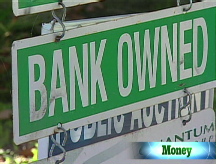
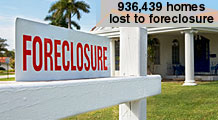
And, of course, there's still the issue of stemming foreclosures. The Bush administration has been loathe to mandate widespread loan modifications. Instead, it is opting to chip away at the problem by adjusting loans held by Fannie Mae and Freddie Mac and by asking banks to expand their programs.

But even federal officials acknowledge the economy won't recover until the tidal wave of foreclosures ends. Federal Reserve Chairman Ben Bernanke Thursday said the government must do more to help struggling homeowners, possibly by buying delinquent mortgages and refinancing them to more affordable terms.

Treasury plan in the works

Lobbyists are ratcheting up pressure on federal officials to do more to entice homebuyers into the market. Various proposals have been floated, but lowering mortgage rates is among the more popular.

One of the more vocal industry groups, the National Association of Realtors, met with top Treasury officials last month to outline a plan to stabilize home prices through lower mortgage rates.

While details remain sketchy, its proposal calls for Treasury to subsidize rates so home buyers pay 4.5% for a 30-year fixed-rate mortgage. It would be similar to a homebuyer paying points -- a percentage of a home's value -- in return for a lower rate, but the government would foot the bill.

The plan would cost $50 billion, said Lawrence Yun, the group's chief economist.

Lowering rates to 4.5% -- about a percentage point below today's rate -- would spur 500,000 home sales over the next year, he said. That would put a big dent in the supply of 4.6 million homes on the market. Right now, there is a 10-month supply of homes for sale, three to four months more than in normal conditions.

A 4.5% mortgage rate would prompt many people to buy, even if they fear home prices will continue to fall and the economy to weaken, he said. Rates have not fallen below 5.37% for 45 years.

A wave of purchases should stabilize home values, which, in turn, will help the economy to turn around.

Last week's announcement by the Fed, which prompted a half-percentage point drop in rates, sent homebuyers' mortgage applications up 37.4%, according to the Mortgage Bankers Association.

"We need to do something to counter that pessimism," Yun said. "Doing nothing will exacerbate the problem."

Lowering rates is among several options the Treasury Department is considering. An announcement could come as early as next week.

More needs to be done

Experts, however, questioned whether buyers would take advantage of lower rates. They criticized government officials for taking a piecemeal approach -- with narrow programs unveiled every week -- rather than coming up with a comprehensive plan to stabilize the housing market.

"I don't think they are thinking through what they are doing," Rosen said.

What's keeping many homebuyers out of the market are stringent lending standards, not interest rates, experts said. As long as credit remains tight and many banks require 20% downpayments, many buyers will remain on the sidelines.

Instead, banks should make mortgages available with a 5% or 10% downpayment, Rosen said. And while he doesn't advocate a return to the "mirror standard" (when borrowers could get money if they simply could fog a mirror), banks should allow more people to qualify for fixed-rate mortgages if they show sufficient income.

The government could also provide more incentives to homebuyers. Instituting a federal tax credit at closing to help cover costs would appeal to many purchasers, said James Gaines, research economist with the Real Estate Center at Texas A&M University. A $7,500 credit approved by Congress this summer -- which is really a loan since it must be paid back -- isn't working.

"It hasn't done any good," Gaines said. "Make it a real credit for home purchases."

Another option is to provide incentives for investors to buy properties and turn them into rentals, he said. This could be done with various tax incentives, such as eliminating capital gains tax on homes owned for more than five years.

Other experts said a mortgage-rate reduction could work, but only if it were done on a temporary basis. That would prompt people to take advantage of the lower rates while they last, said Edward Leamer, director of the UCLA Anderson Forecast, a quarterly economic review.

As the economy continues to weaken, however, some economists say the answer to the housing crisis lies in stabilizing the job market. As more people lose their incomes, more fall behind in their mortgages and lose their homes. This trend will accelerate the number of foreclosures and keep prices in a downward spiral.

If people fear for their jobs, or even worse, have no job, they will not make big-ticket purchases like a home, said Christian Menegatti, lead analyst for economic research firm RGE Monitor. That's why the government should consider an economic stimulus package that will help keep both home values and employment from declining.

"Potential homebuyers may not be in the condition to buy a home no matter what because of a job loss or a drop in income," he said.

source: cnn.com

link to the original post:
http://money.cnn.com/2008/12/04/news/economy/low_mortgage_rates/index.htm?postversion=2008120512


Fort Lauderdale Blog and Real Estate News
Rory Vanucchi
RoryVanucchi@gmail.com

http://waterfrontlife.blogspot.com
www.FortLauderdaleLiving.net

Exec had mortgage racket down to an art

Exec had mortgage racket down to an art

Orson Benn has gone to prison for falsifying applications, but a former associate in Homestead still sells mortgages.

Borrowers Betrayed Part 4
Orson Benn's network of mortgage brokers wrote thousands of subprime loans in Miami-Dade which have gone into foreclosure.
MIAMI HERALD STAFF

jdolan@MiamiHerald.com

Orson Benn, once a vice president at the nation's largest subprime lender, spent three years during the height of the housing boom tutoring Florida mortgage brokers in the art of fraud.

From his office in New York, he taught them how to doctor credit reports, coached them to inflate income on loan applications, and helped them invent phantom jobs for borrowers.

When trouble arose -- one broker got caught, another got cold feet -- Benn called his trusted fixer in Miami to remove the problem and get the loan approved: Yvette Valdes.

The 48-year-old Valdes was a key figure in helping Benn tap into one of the country's most lucrative mortgage markets during his run with Argent Mortgage, The Miami Herald found.

Benn and several associates were convicted of racketeering this year, but Valdes still sells mortgages from a nondescript storefront in Homestead.

While prosecutors looked at roughly $100 million in loans written by Benn and a cadre of co-workers, that represents just a portion of the loans they approved during his aggressive expansion into Florida.

The Miami Herald found that Benn's network approved more than $550 million in home loans from Tampa to West Palm Beach to Miami, according to an analysis of court records.

In Miami-Dade County alone, Benn's office approved more than $349 million in loans on 1,913 homes -- more than one in three have since fallen into foreclosure, the analysis shows.

Valdes brokered at least 100 of those loans worth $22 million -- nearly all based on false and misleading financial information, the newspaper found.

One borrower claimed to work for a company that didn't exist -- and got a $170,000 loan. Another borrower claimed to work a job that didn't exist -- and got enough money to buy four houses.

In a brief interview with The Miami Herald, Valdes blamed the borrowers, refusing to comment further. Her lawyer, Glenn Kritzer, said she has done nothing illegal.

With so many of Benn's loans now in foreclosure, Miami-Dade County is littered with still more empty homes. Squatters inhabit some; crack dens occupy others. At least one has been stripped to the ground, leaving only the foundation.

''It's like a desert,'' said Reynaldo Perez, 41, who lives in a Homestead town house financed by Benn three years ago. ``Just on my street, there are five or six homes being foreclosed.''

Although the Office of Financial Regulation -- the state agency entrusted with policing the mortgage industry -- was alerted to Valdes's role in Benn's network at least three years ago, it never launched an investigation, the newspaper found.

Since 2005, the agency has had copies of some of the same misleading loan applications that The Miami Herald reviewed.

Terry Straub, the OFR's director of finance, acknowledged that his agency had evidence against Valdez. ''I don't have any explanation for why we didn't pursue it,'' he said.

In fact, state regulators ignored more than a dozen written warnings about brokers in Benn's network, the agency's records show.

Despite a law banning criminals from getting licensed -- created after a Miami Herald series was published this summer -- two brokers in Benn's network who pleaded guilty in May to conspiracy charges in the case remain licensed.

THE BEGINNING

The path to Valdes and other brokers began in 2002, when Benn was hired by Argent Mortgage, which would become the nation's largest provider of loans to people with low credit scores.

Known as ''Big O,'' the six-foot three-inch, 280-pound Benn grew up as the son of a subway mechanic in one of Brooklyn's toughest neighborhoods. Even without a formal banking education, he needed just three years to advance from a clerical job to vice president.

At first, his job was to trouble-shoot problems that cropped up in loan applications, court records and interviews show.

Argent made money bundling the mortgages and selling them to investors on Wall Street, not by collecting monthly checks and depending on the borrowers' ability to pay. The accuracy of loan applications was not a priority, Benn later testified.

With control over hundreds of millions of dollars in loans, Benn launched a subprime empire that would soon cover most of Florida.

After four months on the job, Benn flew to Tampa to meet with brokers who courted him with a luxury box at a Tampa Bay Lightning hockey game, football tickets and strip-club outings, court records show.

He taught one of those brokers, Scott Almeida, a convicted cocaine trafficker, to prepare phony income statements and doctor credit reports.

A few months later, Almeida introduced Benn to Tampa brokers David Tuggle and Eric Steinhauser.

After Benn taught them to prepare phony documents, they began to write millions of dollars in loans.

Along the way, the brokers showed their gratitiude. DHL envelopes stuffed with cash -- a total of hundreds of thousands of dollars -- routinely arrived at Benn's million-dollar house in the New York suburbs. In slightly more than two years, Tuggle and Steinhauser alone paid Benn between $70,000 and $100,000, they told police.

SOUTH FLORIDA LINK

As the scheme grew riskier, it extended south, almost 300 miles, to Yvette Valdes in Homestead.

Benn told Steinhauser to create a phony deed to help a borrower get a loan. But Steinhauser said he had trouble finding someone in Tampa willing to help him because the deed would be filed in court.

So, Benn referred him to Valdes at Sandkick Mortgage.

For 16 months, Valdes and her co-workers were a mainstay of Benn's lucrative Miami-Dade operations, writing more than $1 million worth of loans in a typical month.

The Miami Herald obtained every loan application that Sandkick sent to Argent between May 2004 and September 2005, for mortgages totaling $22 million.

The documents include the personal and financial information about the borrower supplied by the broker.

Out of 129 applications, 103 contained red flags: non-existent employers, grossly inflated salaries and sudden, drastic increases in the borrower's net worth.

The simplest way for a bank to confirm someone's income is to call the employer. But in at least two dozen cases, the applications show bogus telephone numbers for work references, the newspaper found.

On three applications, Valdes provided her own private cellphone number, even though the borrowers did not work for her.

Another application included a letter from ''Community Bank,'' saying the borrower had $63,000 in his account. The phone number on the letter does not belong to a financial institution, however. It belongs to Bill Rieck, a Key West city employee, who told The Miami Herald that he was surprised his number was used.

''I ain't no community bank,'' he said, adding that the cell number has been his for six years.

INCOME AT ISSUE

When Kendale Lakes couple Monica Gaviria and Stacy Duthely applied for a loan through Sandkick in January 2005, they declared a combined income of $68,000 a year. She was a hair stylist; he, an interpreter.

When the loan went through a few months later, the documents showed more than a fivefold increase, to $384,000.

Gaviria said that figure is grossly inflated, but said she knew nothing about the change on her mortgage application until this year when she fell behind on her payments and the bank called her.

She said the bank representative demanded, ``What's the problem? You make $17,000 a month.''

As the months went by, Valdes began to write more loans for Benn, records show. She started small with an $87,000 loan in May 2004, but the next month, her numbers rose to $750,650. By that September, she hit $1 million.

The following year, she went on a tear, breaking the $1 million mark seven times.

Along the way, some borrowers came back for more.

One Sandkick customer, Erica Wright, bought her first house in July 2004, when she was 21. Her loan application said she was the office manager at Weldon Industries, a Tampa fence manufacturer, for four years. The job paid $40,000 a year.

But when reached by The Miami Herald last month, the company's general manager, Scott Franzen, said, ``We've never had anyone here by that name.''

In September 2004, Wright bought three more houses using Weldon as the employer, even claiming a big raise to $78,840.

Wright could not be reached for comment. All four properties have fallen into foreclosure, leaving $501,677 in unpaid debt.

While Valdes was flooding Miami-Dade with risky loans, Benn's network drew the attention of state regulators several times.

One of the brokerages doing business with Benn -- Total Mortgage of Tampa -- incurred 10 complaints in just two years.

In four of those cases, state regulators confirmed that the company provided false and misleading information to get loans. The company owner put false data in her own mortgage application in 2004, regulators found.

Instead of pressing for disciplinary action, including suspending or revoking the license, the state closed the cases.

The company kept going, brokering two more loans -- later investigated by police -- that went directly to Benn's chief co-conspirator, Argent banker Sam Green.

Green managed to get two mortgages to buy one home. He used one loan to pay for the property, and illegally pocketed the other -- $79,000, he later admitted to police.

SCHEME UNRAVELS

While Benn and his co-workers approved more than half a billion dollars' worth of mortgages during their run at Argent, it was a complaint filed by an elderly Tampa borrower over a disputed loan that drew the attention of police in 2004.

As other borrowers stepped forward with similar complaints, Benn's network slowly unraveled.

Investigators from the humble Hillsborough County Consumer Protection Agency began to review Argent loans and discovered irregularities in the tens of millions of dollars.

One by one, Tampa area brokers pointed the finger at Orson Benn.

Last year, statewide prosecutors charged Benn in Polk County with racketeering. At least seven others have been arrested in the same scheme, including the other Tampa area brokers.

Argent succumbed to the troubles of the subprime market and was bought by Citibank last year.

Despite a crackdown on Benn's Tampa brokers, nothing happened to the Miami network where most of the loans were written, The Miami Herald found.

Benn, who has begun an 18-year prison sentence, did not respond to a request for comment. Neither did Tuggle or Steinhauser, both of whom pleaded guilty in the mortgage scheme and await sentencing.

Both are still listed with ''approved'' licenses on the OFR website, the only place consumers can check the status of brokers.

Although state regulators have known about Valdes's involvement for three years, they never took action against her or Sandkick Mortgage.

The agency identified her as an associated target in a fraud investigation of another broker in the Benn network in 2005, records show.

In addition, the file contains two Sandkick loan applications with bogus claims: one showing an inflated salary and the other a phony job.

Terry Straub, director of finance for the OFR, said he can't explain the lack of action.

Valdes and her co-workers wrote their last loan with Benn in late 2005. Since then, 40 percent of the properties have slipped into foreclosure, the newspaper found.

Some have fallen into disrepair, dragging property values down around them. Others are abandoned. One, in Liberty City, has been razed, leaving nothing but a weed-strewn lot.

Last week, Miami Herald reporters visited Valdes at her Homestead office, now known as Best Mortgage Choice. She refused to discuss the newspaper's findings.

When asked about the misleading information in her customers' loan applications, Valdes said, ``That's their problem.''

source: miamiherald.com

link to the original post:
http://www.miamiherald.com/business/real-estate/story/802703-p3.html


Fort Lauderdale Blog and Real Estate News
Rory Vanucchi
RoryVanucchi@gmail.com

http://waterfrontlife.blogspot.com
www.FortLauderdaleLiving.net

Oregon Governor Seeks Mandatory Efficiency Audits for Home Sales

By Libby Tucker

Ted KulongoskiAll homes and commercial properties being sold in Oregon would be required to have an energy efficiency score under a new proposal. (Photo: Associated Press)

Potential home sellers determined to ride out the sputtering housing market would do well to invest in efficiency upgrades while they wait — particularly if a new real estate mandate under consideration on the West Coast is a sign of what’s to come.

Oregon’s governor, Ted Kulongoski, wants to require any owner selling or renting a home or commercial building in the state to obtain a certificate disclosing the property’s energy use and greenhouse gas emissions. The mandate, part of his climate change agenda for 2009, would take effect in 2011 for new and existing homes and in 2012 for commercial buildings.

“With escalating energy prices, a homeowner or small business person has a right to know the energy performance of a home or building they invest in,” reads a draft of the bill provided by the governor’s office. Mr. Kulongoski said he plans to submit it to the Oregon legislature in January.

The certificates could prove both a selling point for owners of energy-efficient buildings and a boon to homebuyers by providing a basis for lower mortgage and insurance rates tied to efficiency.

But they could also become an encumbrance to owners trying to sell old or drafty homes, for whom a low rating could look like a defect.

The bill is likely to face some resistance from the Oregon Home Builders Association and the Oregon Realtors Association. The industry lobbies generally support a voluntary program, but are opposed to a state mandate.

Ted KulongoskiGov. Ted Kulongoski says every Oregon home buyer has the right to know the energy efficiency of a prospective purchase. (Photo: Bloomberg)

Jon Chandler, chief executive of the Oregon Homebuilders Association called mandatory certificates “silly.”

“It’s an educational tool,” Mr. Chandler said. “It doesn’t do anything for energy efficiency one way or another.” Nonetheless, he added, “We’re gearing up for the mandate. We’d like to position ourselves to do the contracting work.”

The proposed bill directs the Oregon Department of Energy to design a home energy rating system, similar to the miles-per-gallon rating on cars.

The basis for such a system might well come from Earth Advantage, a nonprofit sustainable building organization based in Portland. That group has already developed a national certification program for new construction, and it has been working on an efficiency rating program modeled after one in Great Britain, which began requiring certificates for all residential real estate transactions nationwide on Oct. 1.

The Energy Trust of Oregon, an independent nonprofit group created by the Oregon Public Utility Commission and charged with “encouraging energy market transformation” in the state, according to its Web site, is using the Earth Advantage rating system in a pilot project involving 200 Portland homes. The aim is to find the fastest and cheapest way of performing energy audits and issuing certificates for homeowners.

Testing ends this month and the Energy Trust says it will report the results early next year.

“Hopefully this program will serve as a model for the state and the country,” said Kendall Youngblood, a residential sector manager for the Energy Trust. “We’re designing it as an education piece for the homeowner, so they start to understand homes are associated with carbon emissions.”

Other states, including California and Minnesota already have similar voluntary certification programs that use the U.S. Department of Energy and Environmental Protection Agency Home Energy Rating System. Homes are scored between 0 and 100 on an index relative to a model Energy Star home.

The Earth Advantage program would go a few steps further, providing bars that depict a home’s actual energy use, utility costs and carbon dioxide emissions.

source: nytimes.com


link to the original post:

http://greeninc.blogs.nytimes.com/2008/12/05/oregon-governor-seeks-mandatory-efficiency-audits-for-home-sales/#more-651


Fort Lauderdale Blog and Real Estate News

Rory Vanucchi

RoryVanucchi@gmail.com

http://waterfrontlife.blogspot.com

www.FortLauderdaleLiving.net

I-95 express lanes up and running

After early traffic snarls, confusion, flattened divider pylons and much buzz, Interstate 95's express lanes are finally operational.

Tolling along the two-lane, seven-mile stretch running northbound from I-195 to the Golden Glades interchange opened Friday morning without much difficulty.

No accidents had been reported as of 11:45 a.m., said Roy Santana, a Florida Department of Transportation engineer in charge the express lanes. More than 3,250 vehicles used the lanes between 6 a.m. and 10 a.m., he said.

The hope is for the express lanes to ease congestion along I-95 where, on any given weekday, 250,000 to 300,000 vehicles travel in Miami-Dade County alone.

Registered commuters with three or more people in a vehicle can use the express lanes for free. The same applies to registered hybrid vehicles and motorcycles. SunPass users, on the other hand, can use the express lanes for a toll that will vary between 25 cents and $6.20, depending on the amount of congestion in the regular lanes. Drivers can see toll prices posted on electronic signs.

Express lanes will be added in phases over the next few years, first going southbound on I-95, and then expanding the northbound lanes up to Fort Lauderdale.

During this initial phase of the plan, FDOT projects about 19,000 vehicles will use the lanes each weekday. Once the northbound lanes are extended and southbound lanes are added, that number could exceed 30,000 vehicles each weekday, FDOT spokesman Brian Rick said. He noted that many of these vehicles will carry multiple carpoolers, further reducing the amount of traffic that otherwise would have been on the highway.

Carpool registration is being overseen by South Florida Commuter Services, a FDOT-sponsored agency that works with businesses to help promote efficiency in transportation through carpooling and mass transit. So far, more than 3,000 participants have signed up, said Jim Udvardy, the agency’s executive director.

Udvary said he expected that number to increase as people become more familiar with the lanes. He also said area businesses — which SFCS has not yet seen offering express lane subsidies to employees — likely will start subsidizing express lane travel, too.

“I think there’s been some hesitancy to move forward from an employer perspective, to see how it works first,” he said.

source: southflorida.bizjournals.com


link to the original post:

http://southflorida.bizjournals.com/southflorida/stories/2008/12/01/daily49.html#


Fort Lauderdale Blog and Real Estate News

Rory Vanucchi

RoryVanucchi@gmail.com


http://waterfrontlife.blogspot.com

www.FortLauderdaleLiving.net


Predatory Lending - Are You a Victim?

With all of the finger-pointing and outcries about corrupt and greedy brokers and agents, every homeowner facing may feel victimized. And certainly, there was a of deception and outright in the during the boom years. But there are a few important to watch out for that may indicate the of a predatory company.

One of the clearest of predatory lending may be when homeowners or buyers are asked to sign documents that are completely blank or told to leave off the date. This gives the opportunity to backdate, forward-date, or fill in incorrect information on a application or disclosure forms, keeping important notices from the . When the time comes to close the loan, the buyers may receive a completely different loan than they originally were sold, but which curiously has what appears to be their signatures on all the required documents.

Closely related is the issue of being asked to sign documents that have blatantly misleading or false information on them. Inflating a family’s monthly income to qualify for a higher payment is nothing more than a set-up for down the road. Of course, some did this voluntarily and lied on their loan applications without the of their , but being asked by a loan originator to sign off on incorrect figures will lead to unintended consequences and possible or prosecution for .

Loan originators were also guilty during the bubble of putting homeowners in inappropriate with high or deadly interest adjustments. They persuaded the to go along with the loan in the hopes of refinancing in a year or two when their credit had improved. As is now known, however, most did not qualify for the mortgages in the first place and were unable to qualify for a once were raised and credit started becoming scarce. This helped lead directly to the crisis now facing the , as subprime never became prime; they just became sub-subprime.

Also, it is vitally important that homeowners, at the time of closing, carefully read the sales agreement and loan documents, especially the sales contract and in Lending . If there are any discrepancies, or the are being asked to sign for a loan that is different than the one they were promised, predatory lending may be being committed. In fact, should have copies of the closing documents at least 24 hours before the closing, and have reviewed them thoroughly and be ready to have any questions answered.

and brokers who relied on corrupt appraisers were also complicit in predatory schemes designed to boost their own at the expense of ’ abilities to pay their . Although homeowners want some appreciation of their properties, if they were originally sold a house at the top of an artificial market, an inflated appraisal may have been used. values should reflect the market conditions — not be inflated to the very highest amount that can be borrowed, putting the owners into a loan on a house that is not worth even close to what they pay for it.

Unfortunately, the amount of in the facilitated by the and the have led directly to a crisis of epic proportions. So many first time buyers and uneducated owners were taken of by lender misconduct and predatory that it is difficult to separate the unqualified who got in over their heads from the truly criminal companies that fraudulently induced this toxic debt. But if homeowners suspect they are a victim of in any way, they should the appropriate regulatory agencies and make sure to fight their in court for as long as it takes.

The ForeclosureFish website has been created to help homeowners research ways they can stop and defend against their ’s attempts to sell the house out from under them. The site describes various methods to use, including refinancing and modifications, along with more information about predatory lending and other lender misconduct. Visit ForeclosureFish to read more about various aspects of the process, as well as how to recover from a hardship: http://www.foreclosurefish.com/


source: offshoreblog.net

link to the original post:
http://offshoreblog.net/predatory-lending-are-you-a-victim/


Fort Lauderdale Blog and Real Estate News
Rory Vanucchi
RoryVanucchi@gmail.com

http://waterfrontlife.blogspot.com

www.FortLauderdaleLiving.net