Oct 30, 2008

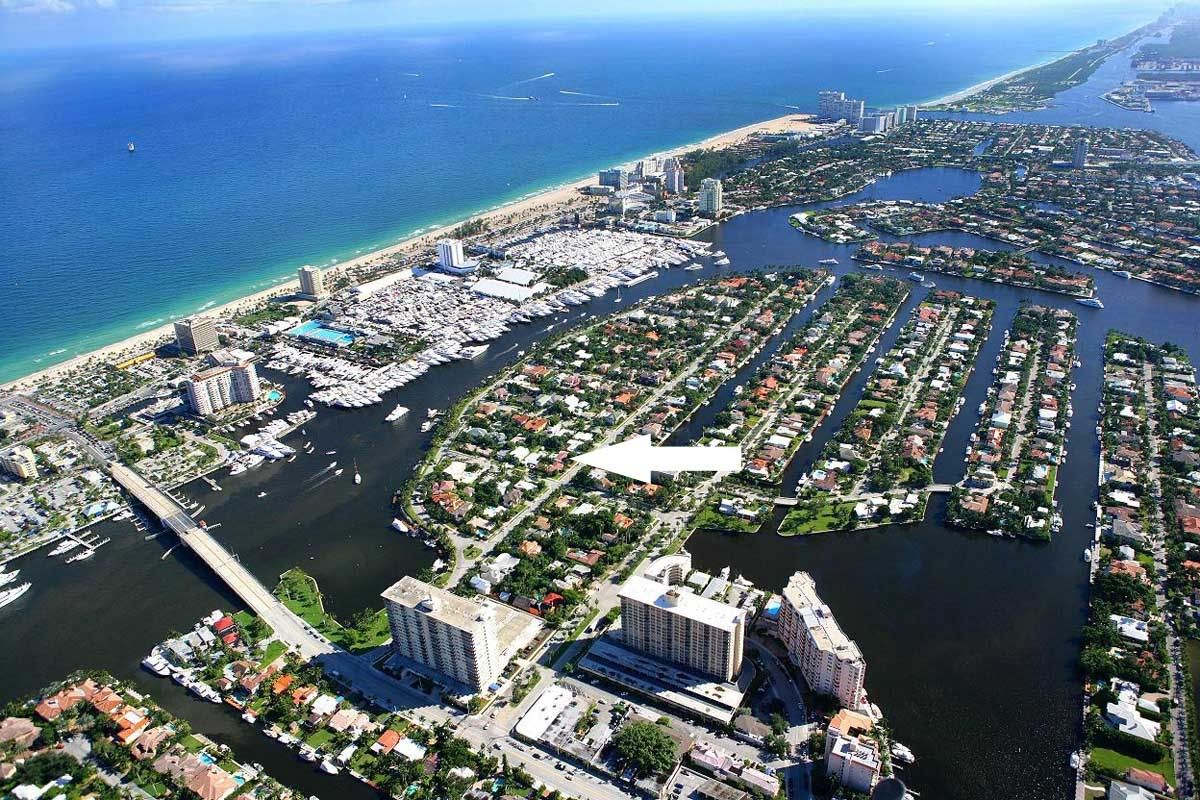
410 Poinciana Drive - Las Olas Islands - Off Market


410 POINCIANA DRIVE – LAS OLAS
Historical Idlewyld Community - Circa 1920’s
Walk to Beaches and Las Olas Merchants


Lot: 75 Ft x 100 Ft per Survey
Heated Saltwater Pool Faces East for Maximum Sun
Back Yard is Ample for Pets or Play Area
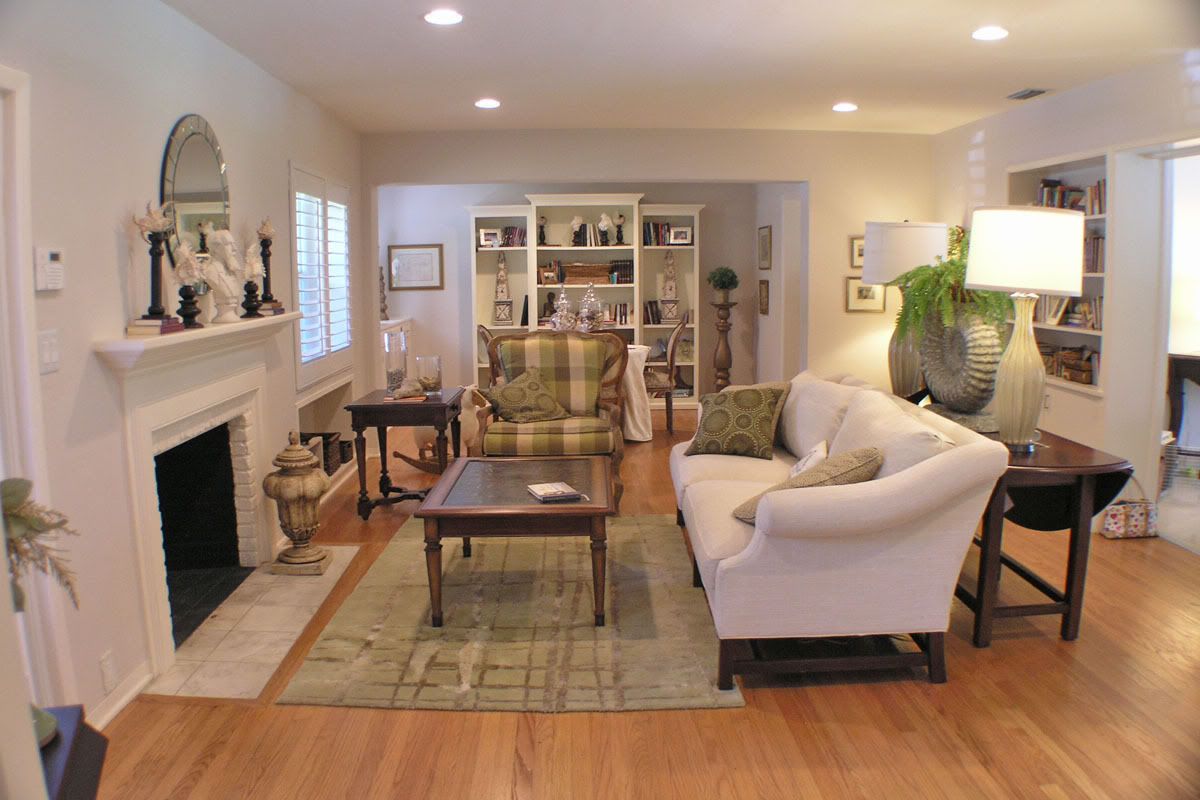
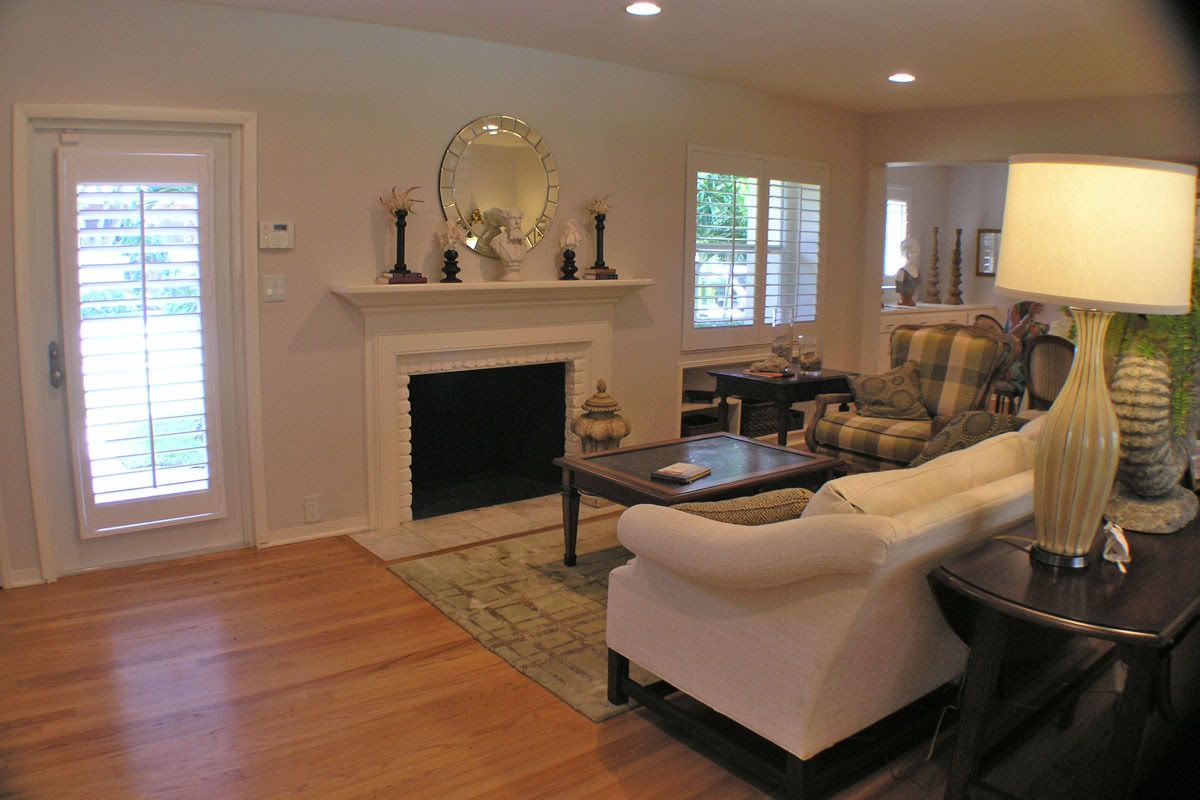
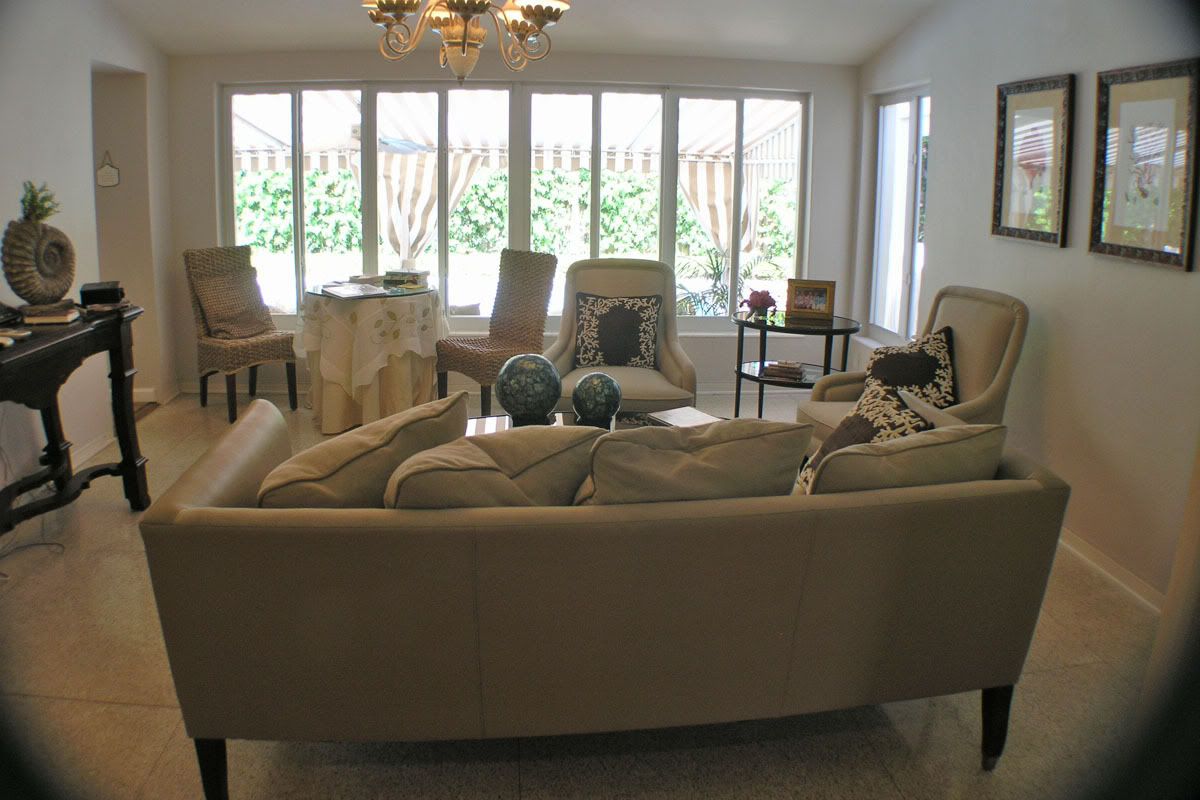
Living Area: Restored Hardwood Floors & Fireplace
Family-Media Room: Earthtone Terrazo Floors
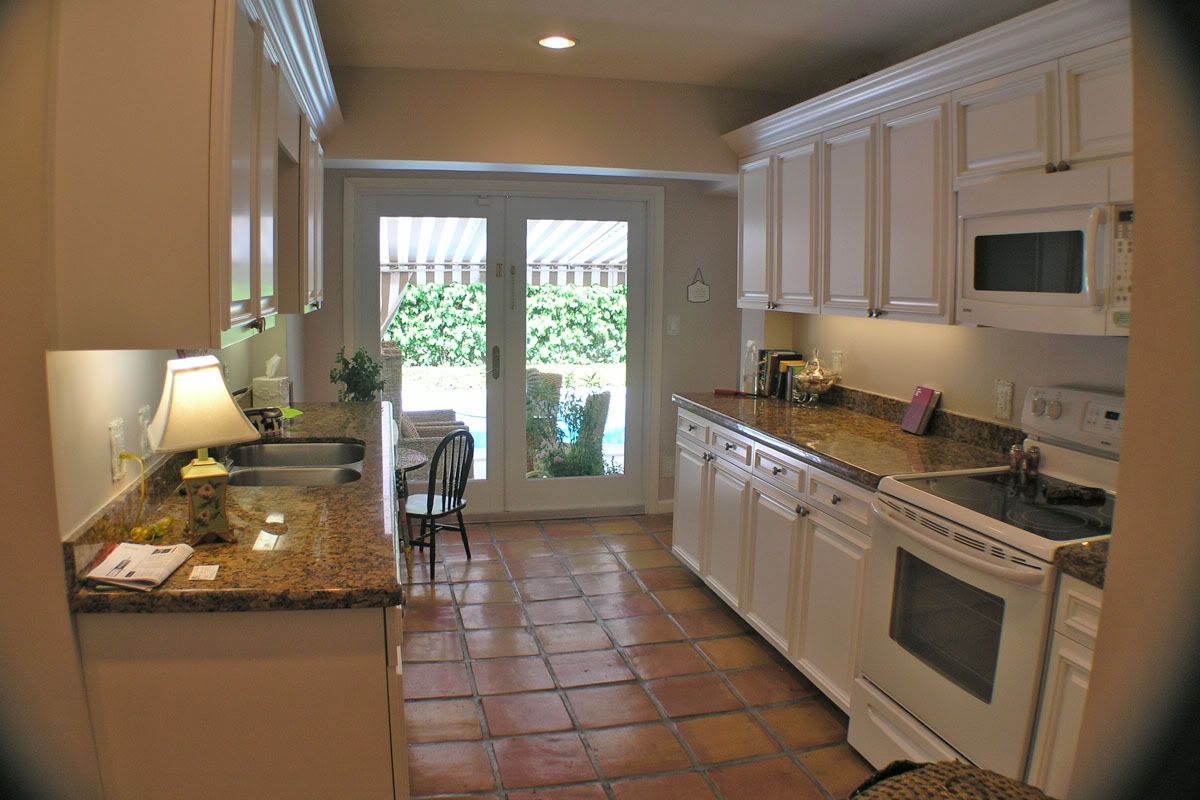
Kitchen: Refurbished Cabinetry & Mexican Tile Floors
Awning Covered Patio - Outdoor Pool Shower
Master Suite: Oversized Bath with Dressing Area
Hurricane Impact Glass Doors & Windows

3 Bedrooms - 3 Full Baths – 1 Car Garage
Circa 1940 Home with Spanish Influences
2008 Taxes: $12,705
Square Footage per Tax Records: 2104 Ft
Home Owner's Association: Non-Mandatory
Central Air & Heating

Schools: Harbordale Elem- Sunrise Middle- Ft Laud High


410 Poinciana Drive, Fort Lauderdale, FL 33301
Price: $849,000 - MLS ID: F944136

OUR PROPERTIES FOR SALE:
www.LasOlasLifestyles.com

FORT LAUDERDALE REAL ESTATE BLOG - OUR BLOG:
www.FortLauderdaleLiving.net

PROPERTY WEBSITE:
http://waterfrontlife.blogspot.com/2008/07/410-poinciana-drive-las-olas-islands.html

VIRTUAL TOUR:
http://www.webswork.com/vr/VRViewer.asp?ID=F944136

LAS OLAS MERCHANTS & EVENTS:
http://LasOlasBoulevard.com


SUZANNE WRIGHT: 954-328-0594
RORY VANUCCHI: 754-246-7758
JEAN WHITSON: 954-494-4636

fax: 954-467-6714
RoryScottVan@gmail.com

INTERCOASTAL REALTY, INC.
1500 East Las Olas Boulevard
Fort Lauderdale, FL 33301

Fort Lauderdale Real Estate Blog & Homes for Sale

Fort Lauderdale International Boat Show begins its 5-day run

Fort Lauderdale International Boat Show begins its 5-day run

Fort Lauderdale's 49th annual boat show, which runs from Oct. 30 through Nov. 3, displays more than a billion dollars' worth of boats, yachts and accessories from every major marine manufacturer worldwide. It's also claims to be the world's premier venue for superyachts, so bring your supersized wallet.
Photos
Sneak peek of the Fort Lauderdale International Boat Show

Sneak peek of the Fort Lauderdale International Boat Show

The 2008 Fort Lauderdale International Boat Show takes place Thursday Oct. 30 through Monday Nov. 3 and will feature more than 3 billion dollars worth of boats, yachts, superyachts, electronics, engines and other boat accessories.

Beat traffic, arrive by boat to the show

Fort Lauderdale International Boat Show veterans will notice some changes at this year's show.

Re-rig your old boat with awesome new gear

If you're not in the market to buy a boat, the boat show has plenty of products to update your current boat.

Lazzara's huge showroom unique as its yachts

The superyachts along the face dock at Bahia Mar Yachting Center always command attention at the Fort Lauderdale International Boat Show, but this year the Lazzara exhibit could be the highlight.

Steve Waters: It takes comfortable shoes and a good game plan to conquer show

To make the most of the Fort Lauderdale International Boat Show, you have to have a game plan. With thousands of boats and marine accessories spread over six sites, it's easy to get sidetracked and miss seeing what you want to see.

Industry bucks troubled waters

With bankruptcies, takeovers, bailouts and Wall Street dominating the news these days, it seems the timing of the 49th Fort Lauderdale International Boat Show could be better.

Marine industry rolls out latest innovations

If you're in the market for a new boat, you have plenty of choices at the Fort Lauderdale International Boat Show.

Selling satisfaction

Staying afloat in these worrisome economic times can be tough for a boat dealer, but Joel's Outboard Marine has been able to hold its own by doing whatever it takes to make the customer happy.


source: Sun Sentinal

Fort Lauderdale Real Estate Blog & Homes for Sale


Fort Lauderdale neighborhoods receive funds for makeovers

An infusion of cash is paving the way for three Fort Lauderdale neighborhoods to begin sprucing up their streets.

City commissioners recently allocated $54,500 from the neighborhood capital improvement grant program to homeowners associations in Oak River, Seven Isles and Coral Ridge Country Club Estates for landscaping and other enhancements.

As part of the agreement, each association will provide matching funds. Two of the neighborhoods expect work to be completed by winter. A $35,000 grant to Seven Isles is earmarked for green screens of hedges and flowering plants around utility boxes, an environmentally friendly irrigation system and trees along Seven Isles Drive, between Las Olas Boulevard and Castilla Isle. More flowering plants will be placed along the sea wall, said Howard Steinholz, president of the Seven Isles Homeowners Association.

A stamped wave design will be placed on the crosswalk at the community's entrance. Similar designs will decorate two of the neighborhood's six asphalt bridges. Residents intend to put waves on the remaining bridges when more funding becomes available, Steinholz said.

Work on the $70,000 project is slated to begin this month. Community leaders had a drive, asking for contributions to meet the required $35,000 match, Steinholz said.

He's pleased so many homeowners dug into their pockets.

"We had a tremendous turnout," Steinholz said.

Property owners in Oak River will be digging in, too. They'll be using shovels and other tools to replenish an 80-foot-long stretch of roadway that runs through the center of their neighborhood.

Volunteers are aiming to kick off their $14,400 project in November. The long-awaited makeover, with half the funds coming from a $7,200 grant, will replace foliage knocked down along Southwest 19th Street when Hurricane Wilma hit in October 2005, said David Founds, president of the Oak River Homeowners Association.

The oak canopy survived, but the palm trees and shrubs took a beating from the storm. Plans are to uniformly redo the landscape on both sides of the street, install a water-saving irrigation system and set out new welcome signs, Founds said.

Since Wilma, the city has put in new sewers and repaved the streets. Beautifying the area's main thoroughfare will be the finishing touch, he said.

"It's going to be a real community project," Founds said. "It will totally enhance the experience of driving into Oak River."

A third grant for $12,300 was issued to Coral Ridge County Club Estates. Improvements at Bayview Park and upgrades to the main entrance are expected to be completed this spring, said John Washburn, who sits on the homeowners association board.

A portion of the money will be used to upgrade landscaping at the main entryway on Bayview Drive, just north of Oakland Park Boulevard.

Other plans include putting a green buffer of trees and shrubs along a chain-link fence that runs between the park and Cardinal Gibbons High School, Washburn said.

Spectators also will be able to watch games in the shade because large oak trees will be planted at the park's two baseball diamonds, he said.

The grant is a great boost toward ongoing efforts to further enhance the community, Washburn said.

"We're always trying to upgrade the quality of the park," he said.

source: Sun Sentinal

Fort Lauderdale Real Estate Blog & Homes for Sale

Euro could fall to parity with dollar

NEW YORK: The euro's sharp descent against the dollar may have further to run as a potential emerging-market crisis threatens more trouble for European banks, and the euro may even return to parity with the dollar.

Emerging markets, once thought to be immune to the global credit crunch because of improved policies and five years of economic growth, are feeling the effects of the worst banking crisis in industrialized nations in decades as investors pull out of riskier assets across the board.

The meltdown in stocks and currencies from Asia to Latin America has spurred fears about the exposure of European banks, which had been aggressive in pursuing opportunities in emerging markets over the past decade.

"European banks account for about three-quarters of the $4.7 trillion of cross-border loans to emerging markets," said Marc Chandler, global head of currency strategy at Brown Brothers Harriman in New York. "Despite the finger-pointing from Europe as to how irresponsible the U.S. has been, there is a crisis brewing of their own making that may turn out to more destabilizing than the U.S. subprime fiasco."

Some of the most respected banks in Europe, like HSBC, BNP Paribas and Société Générale, have seen their shares plummet in recent days amid deepening gloom about emerging economies, particularly those in Central and Eastern Europe, with which they have close financial and trade relationships.

The euro fell to a two-and-a-half-year low against the dollar Tuesday. The euro has declined 22 percent since hitting a record above $1.60 in mid-July, falling more than 11 percent this month.

The euro has sold off sharply in recent months, with economic growth prospects for the 15-nation euro zone deteriorating sharply after the financial crisis that started in the United States spilled over to the rest of the world.

Several European banks have been bailed out, and fears are growing that the unprecedented efforts by governments to shore up the financial system will not be enough to prevent Europe from falling into recession.

"We see the risk of hitting parity by the beginning of 2009," said Sebastien Galy, a currency strategist at BNP Paribas in New York, referring to the euro and the dollar. "The downside risk to the euro continues to be the financial and economic repercussions of the credit crunch traveling through Eastern Europe."

Stephen Jen, global head of currency research at Morgan Stanley in London, said European banks were five times as exposed to emerging markets as their American or Japanese counterparts.

Bank exposure to emerging markets amounts to about 21 percent of European gross domestic product.

That compares with only 4 percent of U.S. GDP for American banks and 5 percent of the Japanese economy for Japanese banks, a recent Morgan Stanley study showed, citing data from the Bank for International Settlements.

"The emerging market downturn will be the second epicenter of the global crisis, with feedback effects hitting euroland and the U.K. particularly hard," Jen said.

The benchmark MSCI emerging markets index of stocks has lost 62 percent since July, while a number of countries like Iceland and Hungary have turned to the International Monetary Fund for loans.

Emerging market currencies have also plunged relative to the dollar, with the Hungarian forint and the Polish zloty down about 18 percent this month. The Czech koruna has fallen 11 percent in October, according to Reuters data.

"Emerging markets are extremely vulnerable and the situation will likely deteriorate so much that, unless the IMF intervenes on a massive scale, we will likely see a situation that is more severe than any of the crises we have seen in modern history" in emerging markets, Jen said.

Of particular concern, analysts say, would be an implosion in any of the East European economies.

Consumers in Eastern Europe have financed their purchases with foreign currency loans that offer lower interest rates than domestic rates, but now, with local currencies plunging, the fear is that these loans will not be repaid.

"Many emerging-market citizens have loans denominated in euros or Swiss francs. If their currency continues to drop and they can't meet their loan payments, these defaults will certainly affect the euro," Kathy Lien, director of currency research at GFT Forex in New York.

source: International Herald Tribune

Fort Lauderdale Real Estate Blog & Homes for Sale


The risk your home policy won't cover

It's not tomorrow's big natural disaster. It's getting hit by today's huge premium hikes. Here's how to fight.


By Joe Light, Money Magazine staff reporter

(Money Magazine) -- As if it weren't bad enough that home prices are going down (way down), the cost of homeowners insurance is also moving in the wrong direction: up (in some areas, way up).

And the worst increases aren't confined to the hurricane-ravaged Gulf region. Just ask Paula Aschettino, who lives on Cape Cod, Mass., which hasn't seen a major storm since 1991. Yet in the past two years, her premium has jumped 50% to $4,800 a year.

"My increase in premiums is outrageous," says Aschettino. "Up here we just don't see that kind of damage."

Granted, not every homeowner has suffered premium hikes of that magnitude lately. The most dramatic increases, ranging from 20% to a whopping 100% over the past five years, are showing up in coastal areas.

But rates are also on the rise in midwestern states because of weather nasties like tornadoes and hailstorms. Missouri, for example, saw rates ratchet 40% higher after hailstorms caused $1.9 billion in damage in 2001.

The good news: There are steps you can take to lower your premiums no matter where you live. But to devise your strategy, you first need to understand what's behind the price hikes and how insurers are changing the rules of the game.

New risk models

On the face of it, the reason for higher premiums is obvious: bad weather, lots of it. In 1992, Hurricane Andrew inflicted about $25 billion in damage on South Florida, $15.5 billion of which came out of insurers' pockets.

A hurricane the size of Andrew was supposed to happen only once every few decades, but nobody told that to Katrina, Wilma, Gustav and Ike. All caused billions in damage.

The financial hit led insurers to devise new ways to assess their risk. Under the old method, they calculated the odds of a major storm based on 30 to 100 years of weather history.

But one by one, companies have switched to a model that instead focuses on the past five years - a period of intense hurricane activity. Not surprisingly, that puts a much higher probability on the Big One striking - somewhere, sometime soon. Up and away go the rates.

Consumer advocates, though, aren't buying the new methodology. Insurers' models, they say, are supposed to spread risk out over long periods, keeping premiums steady through both calm and turbulent times. Shifting to such short-term history as a basis for rates, they argue, is a bit like adjusting a baseball player's salary based on his past five games.

"Insurers came after Hurricane Andrew with new models and said, 'Trust us, we know what we're doing now,' " says Birny Birnbaum, executive director of the Center for Economic Justice, a nonprofit consumer advocacy group.

But after a few storms they were back for more rate increases. "That doesn't make sense," he says. Regulators increasingly agree and often turn down insurance company requests for big rate increases.

But when commissioners hold the line, that can lead to a different problem. Rather than write policies at the lower rates, some carriers simply stop serving the area.

Since 2004, for example, Allstate has written 500,000 fewer policies in Florida. State Farm has virtually stopped writing new policies there and is not renewing wind policies for homeowners who live within a mile or so of the beach.

As a result, instead of many insurers competing for your business and keeping rates in check, you might have only one, which charges you as if you're Donald Trump - or even worse, no private insurers at all.

Most states sponsor backup insurers that will issue a policy if no private insurer will, but their rates are usually among the highest. Some insurers, regulators and lawmakers are pushing for a federal program to back insurers if a mega-catastrophe does strike, and that could bring rate relief. But there's no indication if or when it will pass.

Don't wait for Washington. Try these tactics to lower your insurance bill now.

Challenge your flood zone. If your community participates in the federal flood insurance program, buy the coverage. As Oklahoma insurance commissioner Kim Holland says, "It floods anywhere it rains." In fact, a third of claims paid out by the national flood insurance program last year were in what were deemed low-risk areas.

But if you have flood insurance already, there's a chance you're paying too much in premiums. Flood maps are redrawn frequently, often putting homes that were in high-risk flood areas, where the premium can cost as much as $2,766 annually, into low- and moderate-risk areas, which have premiums between $119 and $1,385.

Your insurance agent could have missed this. To check your status, go to floodsmart.gov and insert your address - you'll see how much you should be paying.

If FEMA's site says your home is a high risk but you think it's not, you can file a petition to amend the flood maps. FEMA might rightfully judge that a wide area is at risk of a flood, but if your property has superior drainage or your home is built on high ground, FEMA can be persuaded to take your home out of the zone.

You'll have to pay a small filing fee and also spend a few hundred dollars to hire a surveyor to analyze your home's risk, but your premium could be cut in half if FEMA relents. To learn more about the process, go to the Homeowners/Renters page on FEMA's Web site.

Get a CLUE. Insurers keep a record of every burst pipe, broken window and cracked ceiling that is put in a claim (or sometimes even inquired about) on a home. They share the information with one another in databases, the largest of which is the Comprehensive Loss Underwriting Exchange (CLUE).

If your home has a history of water damage or you've made several claims recently, any insurer could find out and might charge you extra. But as with credit reports, mistakes can creep into CLUE reports, unnecessarily driving rates up.

Luckily, the same act that makes free credit reports available to you every year also lets you get a free CLUE report. You can access yours at choicetrust.com. If you believe that your report contains errors, go to consumerdisclosure.com, a related Web site.

Don't over- (or under-) insure. Your policy should cover 100% of what it would cost to rebuild your home - not the home's value, which would include the land underneath it. That's why a $750,000 beach cottage on prime real estate might be insured for only $200,000.

Your insurance agent probably has a calculator that will give you a rough estimate, but if your home has historic detailing or unique materials, you might want to hire a builder to come to your home and give an estimate (given the state of the housing market, he's probably not doing anything anyway).

Also, ask if your insurer offers "guaranteed replacement" coverage, which protects you from runaway construction costs that can happen in the wake of a destructive hurricane.

Take a risk. Moving from a $500 deductible to a $1,000 deductible can save you about 20% on your premium. Your emergency fund should take care of small losses, so take the highest deductible that it can cover (leave room for a non-home-related emergency, since those happen too).

As an added bonus, having a higher deductible will also keep you from making frequent claims, which is one of the main factors behind rate hikes and dropped policies.

Don't be loyal. Some insurers give long-time customers up to a 10% discount, but that can pale in comparison with the savings from switching insurers.

At least once every two years, get a quote from another insurer (or more, if they are available) to see if your company still gives you the best deal, advises Mario Morales of MetLife Auto & Home. You can also get quotes from InsWeb.com or Insure.com.

If you've been forced to take a policy from the state-sponsored insurer, check even more often. In the past few years, some high-premium states like Florida and Texas have offered financial incentives to private insurers to get them to write more coastal policies, and some are doing it.

Keep good credit. Just as credit-card companies look at your credit score to determine your interest rate, insurance companies keep an insurance score (not publicly available) to estimate your likelihood of filing a claim.

Turns out, a lot of the stuff that keeps your credit score high also helps your insurance score. Pay bills on time, limit the number of credit cards you hold, and don't finance several major purchases at once to keep your score attractive.

Do that and you could be looking at a doubleheader: lower credit-card bills and savings on your homeowners premium. To top of page